
From GitHub Copilot to automated testing – how AI is reshaping every aspect of web development in 2025
The web development landscape is experiencing its most dramatic transformation since the invention of the internet itself. As we navigate through 2025, artificial intelligence isn’t just changing how we build websites—it’s revolutionizing the entire development process from conception to deployment. With 71.7% of new websites now powered by human-edited AI code and projections showing that 90% of all code will be AI-generated by 2026, we’re witnessing the dawn of a new era in digital creation.
This isn’t science fiction anymore; it’s today’s reality. From GitHub Copilot suggesting entire functions as you type to AI systems automatically optimizing website performance, the integration of artificial intelligence into web development has moved from experimental to essential. Whether you’re a seasoned developer, a business owner looking to build a digital presence, or a tech enthusiast curious about the future, understanding these AI-powered trends isn’t just advantageous—it’s crucial for staying competitive in the modern web.
The Current State of AI in Web Development
The statistics paint a clear picture of AI’s rapid adoption in the development world. According to recent industry research, 2.5% of websites are now created entirely using AI tools, while the vast majority leverage AI assistance in some capacity. This represents a seismic shift from just two years ago when AI coding assistants were novelties used by early adopters.
The transformation extends beyond simple code generation. Modern AI systems are now capable of understanding project requirements, suggesting architectural decisions, identifying security vulnerabilities, and even predicting user behavior patterns. This comprehensive integration means that AI isn’t just making developers faster—it’s making them smarter.
What’s particularly striking is the speed of this adoption. Developers are now writing 256 billion lines of code annually, with this number projected to reach 600 billion in 2025. This exponential increase isn’t because we have more developers (though we do), but because AI is dramatically amplifying individual productivity. A developer who once took weeks to build a complex feature can now accomplish the same task in days, with AI handling the repetitive coding tasks while humans focus on creative problem-solving and strategic thinking.
AI Coding Assistants: Your New Development Partner
The most visible manifestation of AI in web development comes through coding assistants that have become as essential as code editors themselves. GitHub Copilot, now used by millions of developers worldwide, represents just the tip of the iceberg in this rapidly expanding ecosystem.
GitHub Copilot: The Pioneer
GitHub Copilot has fundamentally changed how developers approach coding. By analyzing billions of lines of public code, it can suggest entire functions, complete boilerplate code, and even help with complex algorithmic challenges. Developers report productivity increases of 30-50% when using Copilot for routine coding tasks. The tool excels at:
- Auto-completing repetitive code patterns
- Generating unit tests and documentation
- Translating comments into working code
- Suggesting optimizations and alternative approaches
Tabnine: Context-Aware Intelligence
Tabnine takes a different approach by focusing on team-specific coding patterns. It learns from your organization’s codebase, understanding your particular coding conventions, architectural decisions, and business logic. This personalization makes its suggestions incredibly relevant and consistent with your existing code quality standards.
The New Generation of AI Assistants
Beyond the established players, we’re seeing innovative AI tools like Amazon CodeWhisperer, Replit Ghostwriter, and Codeium pushing the boundaries of what’s possible. These tools are beginning to understand not just syntax and patterns, but project context, user requirements, and even business objectives.
The impact on developer workflow is profound. Instead of spending hours researching Stack Overflow or documentation, developers can now describe what they want to accomplish in natural language and receive working code suggestions. This shift allows for more time to be spent on architecture, user experience, and creative problem-solving—the truly human aspects of development.
Automated Testing and Quality Assurance Revolution
AI’s impact on web development extends far beyond code generation into the critical realm of testing and quality assurance. Traditional testing approaches, while effective, are time-intensive and often catch issues only after they’ve been introduced. AI-powered testing represents a paradigm shift toward predictive and preventive quality assurance.
Intelligent Test Generation
Modern AI systems can analyze your codebase and automatically generate comprehensive test suites that cover edge cases human testers might miss. Tools like Testim and Mabl use machine learning to create, maintain, and optimize tests that adapt as your application evolves. These systems can:
- Generate regression tests automatically when new features are added
- Identify potential breaking changes before they reach production
- Optimize test execution order for faster feedback loops
- Self-heal tests when UI elements change, reducing maintenance overhead
Predictive Bug Detection
Perhaps even more impressive is AI’s ability to predict where bugs are likely to occur before they manifest. By analyzing code complexity, change patterns, and historical bug data, AI systems can flag potentially problematic areas during the development process. This proactive approach has been shown to reduce post-deployment bugs by up to 40% in organizations that have fully embraced AI-powered quality assurance.
Performance Testing at Scale
AI is also revolutionizing performance testing by simulating realistic user behavior patterns and identifying bottlenecks that traditional load testing might miss. These systems can generate thousands of unique user journeys, test various device and network conditions simultaneously, and provide actionable insights for optimization.
AI-Driven Design and User Experience
The marriage of AI and design is creating unprecedented opportunities for creating compelling user experiences. Unlike traditional design tools that require extensive manual work, AI-powered design systems can generate, iterate, and optimize designs based on user data and conversion metrics.
Automated Design Generation
Tools like Framer, Figma’s AI features, and Adobe Sensei are now capable of generating complete web layouts based on content and brand guidelines. These systems analyze successful design patterns, understand accessibility requirements, and can even predict which design elements will perform best for specific audiences.
Personalization at Scale
AI enables dynamic personalization that goes far beyond simple A/B testing. Modern systems can create unique user experiences for each visitor by analyzing behavior patterns, preferences, and context. This level of personalization has been shown to increase engagement rates by 25-30% and conversion rates by up to 15%.
Accessibility Optimization
AI is making significant strides in automated accessibility compliance. Systems can now analyze designs and code to identify potential accessibility issues, suggest improvements, and even generate alternative text for images or audio descriptions for video content. This automation is crucial as accessibility requirements become more stringent and businesses face increasing liability for non-compliant websites.
Performance Optimization: Speed Meets Intelligence
Website performance has never been more critical to business success, and AI is providing unprecedented capabilities for optimization. With websites loading under 2.5 seconds seeing a 15% increase in conversion rates, the business case for AI-powered performance optimization is clear.
Core Web Vitals Optimization
Google’s Core Web Vitals—focusing on loading speed (LCP), interactivity (INP), and visual stability (CLS)—have become essential benchmarks for website success. AI systems can now continuously monitor these metrics and automatically implement optimizations:
- Intelligent image optimization that adjusts compression and format based on device and connection
- Predictive resource loading that preloads content based on user behavior patterns
- Dynamic code splitting that delivers only necessary code for each page interaction
- Automated caching strategies that adapt to traffic patterns and content updates
Real-Time Performance Monitoring
AI-powered monitoring systems like New Relic AI and Dynatrace go beyond simple metric collection to provide predictive insights. These platforms can identify performance degradations before they impact users, automatically scale resources based on predicted demand, and even implement fixes autonomously in many cases.
Edge Computing Integration
The combination of AI and edge computing is enabling new levels of performance optimization. By processing data closer to end users and using AI to predict optimal content delivery strategies, websites can achieve unprecedented speed and responsiveness. This is particularly crucial as user expectations continue to rise and attention spans decrease.
Security and DevSecOps: Proactive Protection
Security has evolved from a post-deployment concern to an integral part of the development process, and AI is leading this transformation. DevSecOps practices, which integrate security throughout the development lifecycle, are becoming standard practice as cyber threats grow more sophisticated.
Automated Vulnerability Detection
AI-powered security tools can now scan code in real-time, identifying potential vulnerabilities as they’re written rather than waiting for security audits. Tools like Snyk, Checkmarx, and Veracode use machine learning to:
- Detect known vulnerability patterns in dependencies and custom code
- Identify potential security anti-patterns in application architecture
- Suggest secure coding alternatives during development
- Monitor for new threats and automatically update protection measures
Behavioral Analysis and Threat Detection
Beyond code-level security, AI systems are becoming sophisticated at detecting unusual behavior patterns that might indicate security breaches or attacks. These systems can identify subtle anomalies that human monitoring might miss, such as unusual access patterns, suspicious user behavior, or potential data exfiltration attempts.
Compliance and Regulatory Adherence
As privacy regulations like GDPR and newer data protection laws become more complex, AI is helping organizations maintain compliance automatically. Systems can track data flow, ensure proper encryption, manage consent mechanisms, and generate compliance reports—reducing both the risk of violations and the administrative burden of regulatory adherence.
Low-Code and No-Code AI Revolution
The democratization of web development through low-code and no-code platforms is accelerating rapidly, powered by AI capabilities that make complex functionality accessible to non-technical users.
Intelligent Platform Evolution
Modern low-code platforms like Bubble, OutSystems, and Webflow are incorporating AI in sophisticated ways:
- Natural language to functionality conversion that translates business requirements into working applications
- Intelligent component suggestions based on project context and industry best practices
- Automated optimization of workflows, database queries, and user interfaces
- Smart integration capabilities that connect disparate systems with minimal configuration
Empowering Citizen Developers
AI is enabling “citizen developers”—business users with minimal technical background—to create sophisticated web applications. This trend is reshaping how organizations approach digital transformation, allowing for rapid prototyping and deployment without extensive IT involvement.
Enterprise Adoption
Large enterprises are increasingly adopting AI-powered low-code platforms for internal tool development, customer portals, and even public-facing applications. This approach allows for faster time-to-market while maintaining professional quality and enterprise-grade security.
The Programming Language Evolution
The rise of AI is influencing which programming languages gain popularity and how existing languages evolve to better support AI integration.
JavaScript’s AI Integration
JavaScript continues to dominate web development, but it’s evolving to better support AI features. New frameworks and libraries are making it easier to integrate machine learning models directly into web applications, enabling real-time AI features without server round-trips.
Python’s Continued Relevance
Python’s strength in AI and machine learning makes it increasingly relevant for web developers who need to integrate AI capabilities. The language’s versatility allows for seamless integration between AI model development and web application deployment.
Rust and Go: Performance Meets Intelligence
Languages like Rust and Go are gaining traction for AI-powered applications that require high performance and concurrency. These languages are particularly valuable for building AI infrastructure, real-time processing systems, and high-performance web services that support AI features.
Emerging AI-First Languages
We’re beginning to see programming languages designed specifically for AI integration. While still experimental, these languages promise to make AI development more accessible and efficient for web developers.
The Future of AI Web Development
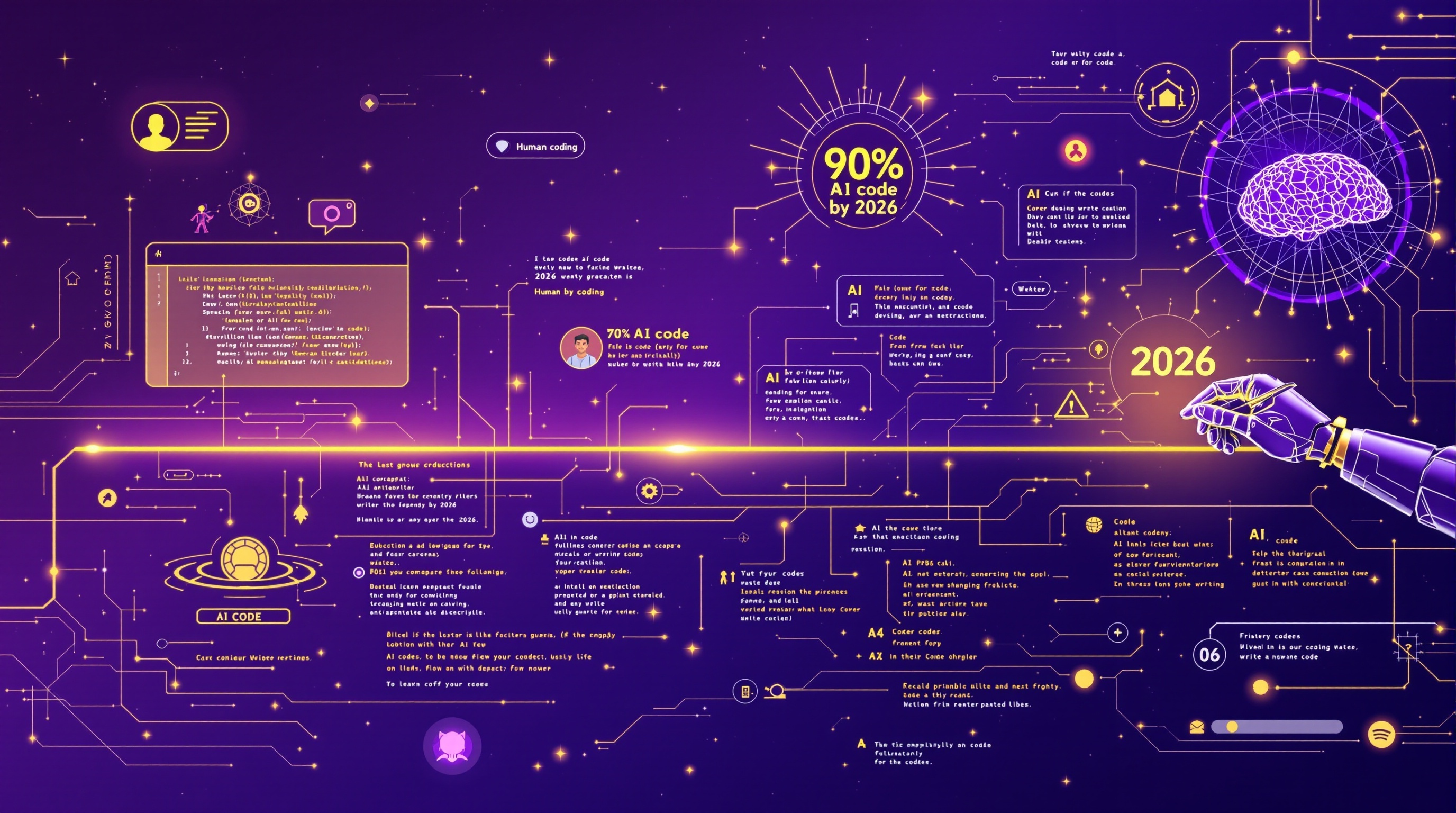
As we look toward the future, the trajectory is clear: AI will become even more integral to web development, but in ways that enhance rather than replace human creativity and strategic thinking.
The 90% AI Code Reality
The projection that 90% of code will be AI-generated by 2026 doesn’t mean developers will become obsolete. Instead, it suggests a fundamental shift in the developer role from code creator to AI collaborator, problem solver, and strategic architect. Developers will focus on:
- Defining requirements and constraints for AI systems
- Reviewing and optimizing AI-generated code
- Integrating complex systems and managing architectural decisions
- Solving unique problems that require creative and contextual thinking
- Managing AI tool chains and optimizing development workflows
Emerging AI Capabilities
The next wave of AI development tools will likely include:
- Full-stack AI architects that can design entire application architectures based on requirements
- Intelligent debugging systems that not only find bugs but explain their root causes and suggest systemic improvements
- Predictive development tools that anticipate future feature needs based on user behavior and business metrics
- Cross-platform AI optimization that automatically adapts applications for different devices, browsers, and performance contexts
Decentralized and Edge AI
The combination of AI with decentralized technologies and edge computing will enable new types of applications that are more private, faster, and more resilient. This trend will be particularly important as privacy regulations tighten and users demand more control over their data.
Practical Implementation Strategies
For developers and organizations looking to embrace AI-powered web development, success requires a strategic approach to adoption.
Getting Started with AI Tools
- Begin with coding assistants like GitHub Copilot or Tabnine to experience immediate productivity gains
- Implement AI-powered testing tools to improve code quality and reduce manual testing overhead
- Experiment with performance monitoring AI to identify optimization opportunities
- Explore design AI tools for rapid prototyping and user experience optimization
Building AI-Ready Development Culture
Successful AI adoption requires more than just tools—it requires a cultural shift toward AI collaboration:
- Training teams on AI tool capabilities and best practices
- Establishing guidelines for AI-generated code review and validation
- Creating feedback loops to continuously improve AI tool effectiveness
- Balancing efficiency with code quality and maintainability
Measuring AI Impact
Organizations should track key metrics to quantify AI’s impact on their development processes:
- Development velocity and time-to-market improvements
- Code quality metrics including bug rates and technical debt
- Developer satisfaction and productivity measurements
- Business impact through improved website performance and user experience
Challenges and Considerations
While AI offers tremendous benefits, organizations must also navigate several important challenges.
Quality Control and Code Review
AI-generated code requires careful review to ensure it meets quality, security, and maintainability standards. Organizations need robust processes for validating AI suggestions and maintaining code consistency.
Dependency Management and Technical Debt
Heavy reliance on AI tools can create new forms of technical debt if not managed properly. Teams must balance the speed benefits of AI with long-term code maintainability and team knowledge retention.
Skills Evolution and Training
As AI handles more routine coding tasks, developers need to evolve their skills toward higher-level problem solving, AI tool management, and strategic thinking. This requires ongoing training and career development initiatives.
Ethical Considerations and Bias
AI systems can perpetuate biases present in their training data, potentially affecting everything from user interface design to content recommendations. Organizations must implement safeguards to ensure AI-powered applications are fair, inclusive, and ethical.
The Business Impact of AI Web Development
The adoption of AI in web development isn’t just a technical trend—it’s a business imperative that’s reshaping competitive landscapes across industries.
Cost Efficiency and Resource Optimization
Organizations leveraging AI development tools report significant cost savings:
- 50% reduction in routine coding time
- 30-40% faster time-to-market for new features
- Reduced hiring pressure as existing teams become more productive
- Lower maintenance costs through improved code quality and automated testing
Competitive Advantages
Companies that embrace AI development practices gain several competitive edges:
- Faster response to market opportunities and user feedback
- Higher quality user experiences through AI-powered optimization
- Better performance and reliability through predictive monitoring
- Enhanced security through automated vulnerability detection
New Business Models
AI is enabling entirely new business models in web development:
- AI-as-a-Service platforms that provide development capabilities to smaller organizations
- Automated website generation services for specific industries
- Intelligent optimization services that continuously improve website performance
- Predictive analytics platforms that help businesses understand and anticipate user needs
Industry-Specific AI Applications
Different industries are leveraging AI web development in unique ways that address their specific challenges and opportunities.
E-commerce and Retail
AI is transforming online shopping experiences through:
- Dynamic pricing optimization based on demand, competition, and user behavior
- Personalized product recommendations that adapt in real-time
- Automated inventory management integrated with website functionality
- Intelligent search and navigation that understands user intent
Healthcare and Medical Services
Healthcare organizations are using AI to create more effective digital experiences:
- Patient portal optimization for better engagement and outcomes
- Automated appointment scheduling and resource management
- Personalized health information delivery based on patient profiles
- Compliance monitoring for HIPAA and other regulatory requirements
Financial Services
The financial industry is leveraging AI for both functionality and security:
- Fraud detection integration with web applications
- Personalized financial advice and product recommendations
- Automated compliance reporting and regulatory adherence
- Risk assessment tools integrated with customer-facing applications
Education and E-Learning
Educational institutions and e-learning platforms are using AI to enhance learning experiences:
- Adaptive learning pathways that adjust to individual student needs
- Automated content generation for courses and assessments
- Performance analytics that help educators improve their teaching
- Accessibility optimization for diverse learner needs
Preparing for the AI-Driven Future
As AI continues to reshape web development, preparing for this future requires both technical and strategic considerations.
Technical Preparation
Organizations should focus on building AI-ready infrastructure:
- Cloud-native architectures that can integrate AI services seamlessly
- Data pipelines that support AI model training and inference
- API-first designs that enable easy integration of AI capabilities
- Scalable hosting solutions that can handle AI-enhanced applications
Team Development
Investing in team capabilities is crucial for successful AI adoption:
- AI literacy training for all development team members
- Specialized AI development roles for complex AI integration projects
- Cross-functional collaboration between developers, designers, and data scientists
- Continuous learning programs to keep pace with rapid AI advancement
Strategic Planning
Long-term success requires strategic thinking about AI integration:
- Identifying high-impact use cases where AI can provide the greatest benefit
- Building partnerships with AI tool providers and specialists
- Creating innovation processes for experimenting with new AI capabilities
- Developing ethical guidelines for responsible AI use
Conclusion: Embracing the AI-Powered Web Development Revolution
The transformation of web development through artificial intelligence represents one of the most significant shifts in the history of computing. With 71.7% of new websites already incorporating AI-generated code and the projection that 90% of all code will be AI-generated by 2026, we’re not looking at a distant future—we’re living through this revolution right now.
The evidence is overwhelming: organizations that embrace AI-powered development practices are seeing dramatic improvements in productivity, code quality, and business outcomes. From GitHub Copilot’s code suggestions to AI-powered performance optimization, these tools are not replacing human developers—they’re amplifying human creativity and strategic thinking while automating routine tasks.
The key to success in this new landscape isn’t about choosing between human expertise and AI capabilities—it’s about creating synergy between them. The most successful development teams of 2025 and beyond will be those that learn to collaborate effectively with AI systems, leveraging artificial intelligence for speed and consistency while applying human insight for strategy, creativity, and problem-solving.
As we move forward, the question isn’t whether AI will continue to transform web development—it’s how quickly organizations can adapt to harness its full potential. The companies and developers who embrace this change today will be the ones setting the standards and leading the innovation tomorrow.
The future of web development is here, and it’s powered by the perfect collaboration between human creativity and artificial intelligence. The revolution has begun—are you ready to be part of it?
Ready to dive deeper into AI web development? Start by experimenting with GitHub Copilot or exploring AI-powered design tools. The future of web development is at your fingertips, and the best time to start is now.